(scroll for English)
De câte ori am făcut impresie bună la prima vedere,
Când funcționarii nu și-au dat ochii peste cap când le-am intrat în birou,
La magazin, când n-am fost tratată drept hoață,
Când nu m-a exoticizat nimeni în țara mea,
Când, fără nicio introducere, am fost o fată bună, de încredere, respectabilă
Și prezența mea nu a jignit, incomodat sau jenat
(mai mult decât a altor fete cu tenul deschis, altă discuție)
Când mi-am dat seama și când nici prin cap nu mi-a trecut
Pielea mea a făcut toate astea!
Și nu m-a împiedicat cu nimic, doar a înlesnit
Ici și colea
Iar eu doar am profitat. Mult.
De câte ori aud că în Banat nu mai era sclavie în secolul XVIII răsuflu ușurată
De parcă atunci ar fi început istoria toată
De parcă albul de pe fața mea n-are de ce să roșească
Că ce-am făcut eu, de ce-s eu vinovată
Alții au asuprit, eu mi-s imaculată
Unde erau „ai mei” când erau romii în robie?
Nu în Banat. Asta se știe.
Dar unde mai exact? Nu știu. Poate la mănăstire.
Poate ai mei au fost și oameni buni
Și criminali și violatori. Și boieri și șerbi. Poate nebuni
Ca mine. Poate s-au uitat către cei înrobiți
Și au răsuflat ușurați că ei îs mai albi
Măcar în ochii stăpânilor
Dacă nu-n albul ochilor.
Poate s-au bucurat că au pielea asta
Poate-au văzut merite depline în lipsa melaninei.
„Meritul” de a trece drept albi, drept neromi și deci nerobi.
Am zis că-i drept? Nu, nu-i drept. Repet.
Să poți să fii oricine, să poți să uiți cine
Și să te pierzi în mulțimea celor ca tine
Nu-i rău, se simte chiar bine.
Auzi
Și chiar dacă unii dintr-ai mei ar fi fost înrobiți
Cine mai știe?
De câte generații știu eu trecem tot drept neromi
În cultura asta albă de stăpân
Și când au fost beneficii ale pielii, pe toate le-am avut și am.
Chiar dacă mai striga lumea „brânză” la mine când eram la mare
Rușinea aia nu o luam cu mine acasă, nu mâncam cu ea la masă
Nu dormeam cu ea în pat. Nu de aia vreau numai să zac.
Acasă nu-mi ziceau vecinii „brânză”, nu se ferea lumea de mine,
Nu mă simțeam mai în siguranță cu alte „brânze”
Și nici când mă bronzam asta nu schimba
Nimic de fapt.
Da, da, la toți ne e greu. Se știe.
Dar când n-aș schimba locul cu vecina mea
Asta înseamnă că mie îmi merge mai bine.
Și știu și eu, așa cum știi și tu, că nu e meritul meu.
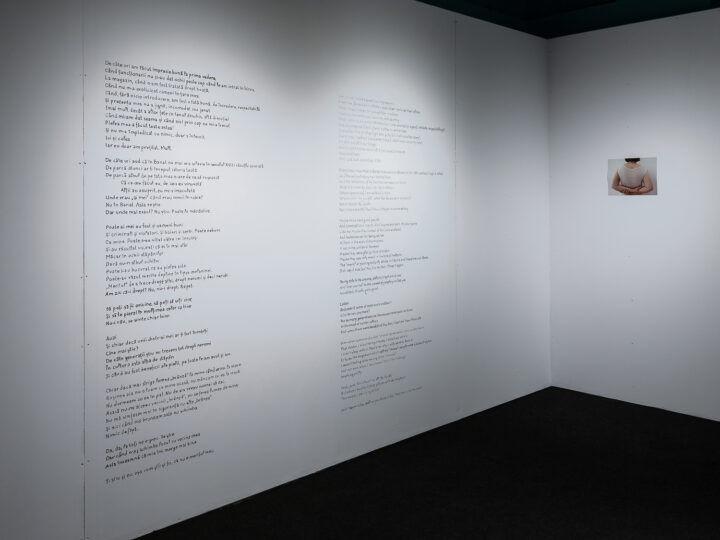
A fost publicat în 2024 pe platforma huliganx, în revista IDEA nr 59/2024. Alături de fotografia Nimeni n-are ce merită, a fost expus în cadrul ediției 2025 a bienalei Art Encounters, Bounding Histories. Whispering Tales., curatoriată de Ana Janevski și Tevž Logar.
The poem states that not having to deal in the day-to-day interactions with the colorism and the racism against Roma gives an unfair and unspoken advantage to a light skin person who might, and often does, mistake it for merit. It’s written in a very accessible language and, while tension builds up, it shifts from free verse (in Romanian, rimă albă, white rhyme) to a rhyme and rhythmic verse in the style of the spoken word poetry of protest, empowerment and holding space. In the style of an account of the personal experiences of the artist as a light skin (white) woman in the region, by changing the rhythm and rhyme it opens towards dialogue. It’s a call for the decolonisation of the private and public space occupied by people and institutions (like the Orthodox Church) that benefited from the enslavement of Roma for over 500 years, and an answer to the call of the spoken word performances of the Romani poet Elvisey Pisică. Thank you for your deep and grounded work. (text for exhibition label)
White
Every time I made a good first impression,
When the clerks didn’t roll their eyes when I entered their office,
When I wasn’t taken for a shoplifter in a store,
When no one exoticized me in my own country,
When, without any prior introduction, I was deemed as a good, reliable, respectable girl
And my presence didn’t offend, bother, or embarrass
(more than that of other light skin girls, but that’s another story)
Every time I realized it and every time it didn’t even cross my mind
My skin did all these things!
And it didn’t hinder me at all, it just eased things up
Here and there
And I just took advantage. A lot.
Every time I hear that in Banat there was no slavery in the 18th century I sigh in relief
As if the entire history had started then
As if the whiteness of my face has no reason to blush
What did I even do, how can I be to blame
Others oppressed, I am without a stain
Where were “my people” when the Roma were enslaved?
Not in Banat. No doubt.
But where exactly? Don’t know. Maybe in a monastery.
Maybe mine were good people
And criminals and rapists. And boyars and serfs. Maybe insane
Like me. Maybe they looked at the ones enslaved
And rested easier for being whiter
At least in the eyes of the masters
If not in the whites of the eyes.
Maybe they were glad to have this skin
Maybe they saw only merit in the lack of melanin.
The “merit” of passing as fairly white, not Roma and therefore, not slaves.
Did I say it was fair? No, it’s not fair. I’ll say it again.
Being able to be anyone, able to forget which one
And lose yourself in the crowd of people just like you
Is not bad, it feels quite good.
Listen
And even if some of mine were enslaved
Who knows anymore?
For as many generations as I know, we never pass as Roma
In the master’s white culture
And when there were benefits of the skin, I had and have them all.
Even when someone shouted “cheese” at me when I was on the beach
That shame, I didn’t bring it home, I didn’t eat with it,
I didn’t sleep with it. That’s not why I only want to lie in it.
At home the neighbors didn’t call me “cheese”, people were not avoiding me,
I wasn’t feeling safer among other “cheeses”
And not even when I was tanned that didn’t change
Anything really.
Yeah, yeah, life is hard for all. No doubt.
But when I wouldn’t swap places with my neighbor
This means I am doing better.
And I know it too well, as you know it too, that this is not my merit.